Minions
The Constant PrincessThe Minions are the boisterous young companions who gather around Henry VIII, embodying the change from the guarded, hardship-shaped court of Henry VII to the freer social world of the new reign. They amuse and encourage the king with wagers and jests, draw criticism from older advisers, and attract the wary attention of Catalina of Aragon. To her, their peacetime disorder also holds a possible military purpose: the same courage and energy that make them disruptive at court could serve England when war comes.
Identity and Place at Court
The name Minions belongs to a circle gathered around Henry VIII, rather than to the older, experienced men who had served his father. The contrast is generational as well as political. Henry VII’s court, as Catalina describes it, consisted of men who had endured difficult times and repeatedly lost and regained their lands. Henry VIII’s court, by comparison, is filled with young people who have not been tested by hardship. Their very presence signals that the character of the court has changed with the accession of a new king.
The Minions are part of a wider company of young men and women, but the group is particularly associated with the young men who encourage Henry’s appetite for excitement. They are portrayed as companions rather than as a body with a stated office or formal programme. Their influence comes from proximity: they share the king’s pleasures and reinforce the idea that a young monarch should be active, daring, and eager to distinguish himself.
Conduct and Social Life
The circle fills its days with mad bets and jests; according to court gossip, its revels continue for much of the night as well. Catalina understands this behaviour in light of Henry’s childhood. He had been kept quiet and closely supervised, and she regards his present desire to run wild with his companions as a natural reaction to that restraint. The Minions offer him a social world in which he can test pleasures and freedoms he had not previously been allowed.
Their reputation is not wholly flattering. The stories circulating about them include drinking bouts, fights, chases, attacks, seductions, and fathers pursuing their sons with cudgels. Older members of the court disapprove and bring stern complaints to Catalina. She does not simply endorse every excess: she distinguishes between the young men’s conduct when they are drinking and their behaviour when they are sober, describing the latter as sweet despite their tendency to talk nonsense. Her response resists turning youthful rowdiness into a general indictment of the king’s companions.
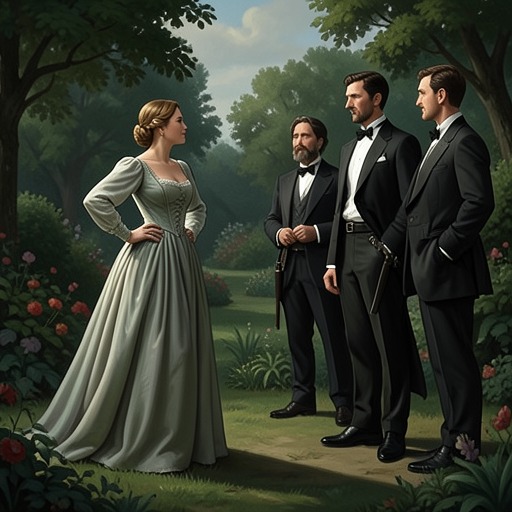
William Compton is Henry’s closest friend among them. The two are often together with their arms around each other’s shoulders, a gesture that can suggest either readiness to dance or preparation for a fight. Compton’s mock-adoration of Catalina makes the company laugh. Other Minions also pretend to be in love with the queen, dedicating verses and singing songs to her. She accepts these performances and makes sure Henry knows that his own poems and songs are the best, turning their flirtatious courtly play into an occasion for reassuring him of her regard.
Catalina’s Management of the Group
Catalina’s handling of the Minions is a form of political judgment as well as social tact. When councillors approach her with complaints, she declines to attack the king’s companions, explaining their excesses as the behaviour of youth. She believes that open criticism would needlessly provoke Henry or turn the older courtiers’ disapproval into a direct conflict. Instead, she leaves room for the king to enjoy his circle while maintaining her own influence through discretion and affection.
Her assessment is not indiscriminate. She recognizes that some of the young men are capable figures: Edward Stafford, Duke of Buckingham, and Thomas Howard, Earl of Surrey, are among those she regards as fine young men who would suit any court. She imagines that her mother would have liked them. This judgment connects her private appraisal of the group to a longer view of service: she sees these youths not only as present-day companions but as future officers.
From Peacetime Disorder to Wartime Use
The Minions’ importance becomes clearer as Henry grows eager for war with France. The Privy Council, shaped by the cautious reign of his father, is alarmed that Henry treats warfare as an essential proof of kingship. The king’s young companions intensify that desire: they want an opportunity to demonstrate their courage, just as Henry wants to show that he has inherited the throne. In this way, the court’s appetite for adventure feeds the political pressure for renewed conflict.
Catalina’s view of the Minions holds both sides of this change together. Their noisy, disruptive manner is an irritation in peacetime, but she believes the energy and courage behind it may be valuable when the country goes to war. She does not present every companion as a proven soldier; rather, she sees the young men as boys who may become army officers, and their present boldness as a quality that could be redirected toward national service. The group therefore marks a transition in the story: the freedoms of Henry’s youthful court are also part of the force urging him toward a more bellicose kingship.
The Minions remain defined by this tension between pleasure and public consequence. They are comic and troublesome companions, a visible sign that Henry’s court has broken with his father’s austere generation, and potential leaders in a conflict whose costs are not yet tested. Catalina’s measured response neither romanticizes their excesses nor dismisses their promise; she tries to accommodate the king’s new world while discerning what it might become.